





How to Avoid Scams and Protect Yourself in 2026
02/05/2026
By: Conor Moreau

I have bad news for you; scams aren’t going away.
It’s a fact of life we have to accept in our digital age: there will always be people who are desperate and willing to go to extremes. Fraud never slows down; it just adapts.
Scam tactics evolve alongside technology, digital banking habits, and everyday tools people trust. That’s why some of today’s scams feel more believable than ever before.
Want to stay even more informed? We’ll break down how these schemes work and ways you can protect yourself when you recognize warning signs.

SCAM ALERT: Fake Lenders Asking for Online Banking Access
One of the more concerning scams gaining traction involves criminals posing as legitimate lenders who are attempting to deposit funds into your account.
It typically begins with an unexpected call, text, or email claiming you have been approved for a loan or that funds are ready to be deposited. I’ve received fake texts about loan applications I never submitted, and it’s easy to get confused.
The scammer then explains that access to your online banking is needed to complete or verify the deposit. The request is framed as temporary or procedural, positioned to help funds reach your account faster.
Once login credentials are shared, the situation escalates quickly. Scammers may link peer-to-peer payment apps (ex. Venmo, Cash App, Zelle), initiate transfers, or move money out of the account.
Warning signs include pressure to act immediately, explanations that minimize risk, or reassurances that the request is standard practice. When urgency and login requests appear together, it is time to stop.
If you are contacted by the 'Atlantic Fraud Department' and are asked for your sensitive information, please disconnect and call us directly.
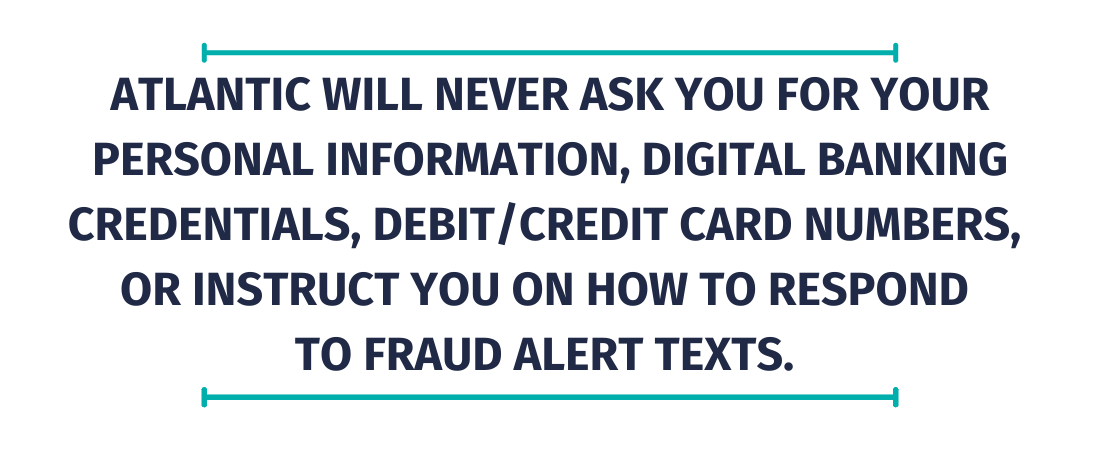
Atlantic will never ask you for your personal information, Digital Banking credentials, debit/credit card numbers, or instruct you on how to respond to fraud alert texts.

SCAM ALERT: “Verify You Are Human” Schemes
Another emerging threat involves fake or compromised websites that use realistic security prompts designed to verify that you are a human and not a bot.
PLEASE don't click on any suspicious links or provide personal information unless you are speaking to a trusted person. If you have any doubts about the call, hang up, look up and verify the company's phone number, and call them back.
You may encounter a webpage that displays a familiar “Verify You Are Human” message, similar to common CAPTCHA tests. Instead of selecting images or checking a checkbox, the prompt instructs you to perform unusual keyboard actions or copy-and-paste commands, which immediately install malware on your device.
Once installed, the malware can monitor activity, capture login information, or provide unauthorized access to accounts without obvious signs that anything is wrong.
People are accustomed to verification prompts and often move through them quickly. The pages look legitimate, and the request does not appear dangerous at first glance. That familiarity is what makes the scam so effective.
Keeping devices and browsers updated helps close security gaps scammers rely on. Running regular antivirus and malware scans adds another layer of defense.

What Connects These Scams?
At first glance, these scams appear different, but they rely on similar strategies. If you’re able to recognize patterns within scams, you can protect yourself from future fraud, even when their tactics change.
- Requests for access instead of direct payments. Rather than asking for money upfront, scammers aim to gain entry to accounts or devices where they can move funds themselves.
- Impersonation of trusted systems or companies. Fake lenders, realistic websites, and familiar security prompts are designed to lower skepticism and hesitation.
- Urgency paired with reassurance. Pressure to act quickly is often balanced with language meant to keep concerns low.
- Misuse of legitimate tools: Online banking platforms, P2P apps, and security features are real tools being exploited for fraudulent purposes. Their familiarity helps hide the fact that something wrong is taking place.
Understanding these shared elements helps you stay prepared as scam tactics continue to evolve.
It’s Time to Protect Yourself
You can’t build an impenetrable wall to keep scams at bay, but you can put up defenses to make it harder for your information to be accessed.
- Update all your passwords. Even if you don’t think your information has been compromised, regularly updating your passwords is a smart way to safeguard your data.
- Consider using a password manager in combination with long, unique passwords that are NEVER reused across multiple accounts.
- Enable multifactor authentication wherever possible. Learn more about multifactor authorization. Protect What Matters Most: Embrace Multifactor Authentication Now
- Consider utilizing websites like, https://haveibeenpwned.com/, to see if your email address has been reported in a data breach.
- Closely monitor your banking and credit card accounts and immediately report unusual activity.
- Receive up-to-date notifications about your credit score with SavvyMoney available in Digital Banking.
These habits provide strong protection without adding unnecessary stress.
What to Do If You Think You’ve Been Targeted
If something feels off, acting quickly can limit potential damage. Early reporting allows the credit union to step in and help secure your accounts.
If you believe you may have been targeted:
- Contact Atlantic’s Fraud Department immediately by calling 800-834-0432.
- Change passwords if access may have been compromised.
- Monitor your accounts and credit report closely.
- File police and fraud reports when appropriate.
The sooner you act, the more opportunities you’ll have to regain control of your accounts. It’s always wise to change your financial account passwords regularly and enroll in multi-factor authentication when available.
TLDR:
Scams are evolving but still rely on urgency, impersonation of trusted institutions, and requests for access to your accounts or devices rather than direct payments. Protect yourself with strong, unique passwords, multifactor authentication, updated devices and security tools, close account monitoring, and by contacting Atlantic’s Fraud Department immediately if you suspect fraud.
We’re Here to Help!
Scams will continue to change, but awareness helps you stay one step ahead. Understanding how modern fraud works allows you to recognize warning signs sooner and respond with confidence rather than panic.
If you would like assistance setting up account alerts, reviewing your digital banking security, or believe you were a victim of fraud, we’re ready to help. Please stop by any of our convenient branch locations or call 800-834-0432 to speak with a team member today.
Each individual’s financial situation is unique and readers are encouraged to contact the Credit Union when seeking financial advice on the products and services discussed. This article is for educational purposes only; the authors assume no legal responsibility for the completeness or accuracy of the contents.