





New Scam Tactics, Same Goal
06/12/2026
By: Isabella Baker


At a glance:
Scams are easy to spot? Not anymore. Today’s fraudsters are getting smarter, using fake alerts, stolen identities, romance schemes, and urgent messages to make you act first and think later. The good news: if you slow down, watch for red flags, and verify before clicking, you’ll be a much harder target.
New Scam Tactics, Same Goal
Scams keep evolving, don’t let them catch you off guard!
Unfortunately, scammers are finding new ways to sound believable, look legitimate, and catch people off guard. A fake text message can look like it came from your financial institution. A phone call can sound like the FBI needing information. Even an ad on Facebook or Instagram can be part of a scam. And they know how to make something suspicious feel urgent enough to act before you’ve taken time to think through it.
That’s why staying informed matters.
Once you know what to look for, it becomes much easier to spot the warning signs, slow down, and avoid making a decision you will regret later. We’re breaking down a few scam trends people are seeing right now, along with some simple ways to protect yourself.
Trend #1: “Move your money now”
This scam starts by creating panic.
You may see a pop-up on your computer or phone warning that your device has been hacked. It will then lead to a phone call or message from someone claiming to be a tech support representative, a fraud department, or a security team from a financial institution.
From there, the scammer is going to create some sort of urgency.
They might say your accounts are compromised, or your money is in danger and that you need to act immediately to protect your funds. Then they will instruct you to wire your money into a so-called “safe” account. Scammers might even claim the account is in your name.
It will sound official. It feels urgent. And that is exactly the point.
Legitimate companies will never pressure urgency when it comes to wiring money. Wire transfers can be very difficult to recover once sent, which is why scammers like to use them.
If someone is telling you to move your money immediately for “security reasons,” stop right there. Hang up the phone and call your financial institution using a trusted number.

Trend #2: Stolen identities and online loan
Not all scams start with a phone call. Some start with someone who seems normal.
Criminals are using fake or stolen identities to apply for accounts and loans online. Similar tactics also show up in online sales (buyer), job applications (employee), or just pretending to be someone else entirely to build trust and get money moving fast.
These scams can be effective because, at first glance, everything can seem believable. But if you step back and take a closer look, the details will start to fall apart.
Common warning signs to help you identify the scam:
- If the person refuses to meet in person.
- Communication stays limited to only email or text.
- The person overly focuses on money.
- Details or stories are changing and not adding up.
Scammers want you to move fast, so you overlook all the small inconsistencies. Taking extra time to verify and look at all the information can save you a bigger headache later.
Trend #3: Romance and online relationship
Some of the most damaging scams do not start with fear or urgency. They start with trust and emotion.
In a romance or relationship scam, a fraudster will spend time building a connection online. This can take days, weeks, and even months. The conversations will start to feel personal and real. And once trust is established, the request for money will begin.
There is usually a story behind the request.
Maybe it’s an emergency, a travel problem, family situation or even an investment opportunity. The details can change, but the goal is the same: get you emotionally invested enough to send money or share account details.
These scams are manipulative and can target anyone.
It’s important to always act with caution when someone you’ve never met is asking for financial help, or suddenly the relationship starts involving money.

Trend #4: Fake fraud text messages
Text message scams are still one of the easiest ways for fraudsters to reach people.
You might get a text saying there is suspicious activity on your debit or credit card, or your package is lost, and you need to pay $0.75. The wording may look professional; the timing could feel believable. The message may create enough concern to make you click the link and then question if it’s a scam.
That is the exact reaction scammers are hoping for.
If you click the link, call the number, or reply with personal details, the scammer may try to collect other important information such as card numbers, banking credentials, passwords, or verification codes.
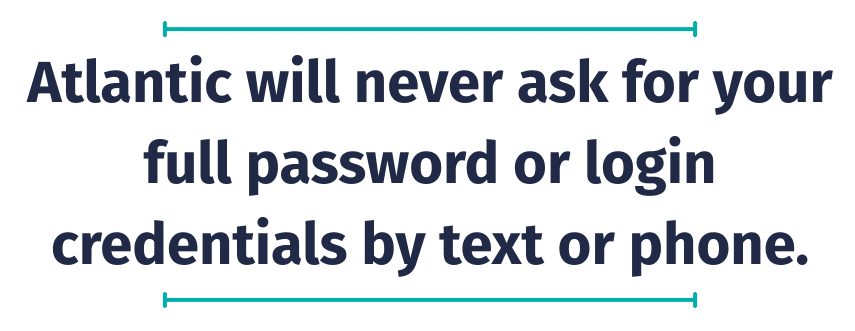
Atlantic will never ask for your full password or login credentials by text or phone.
Red flags to watch for:
Scams may look different from one another, but many of them rely on the same warning signs you should always look out for:
- Pressure to act with urgency
- Requests for wire transfers
- Unexpected pop-ups, calls, texts, or messages
- Asking for personal data: passwords, account credentials, or codes
If you notice one or more of these red flags, that is your sign to stop and verify before going any further.

A little precaution prevents bigger regret
Scams are going to keep changing but staying aware and cautious is going to make a big difference.
If something feels urgent or just a little off. Stop and ask questions. Verify the situation on your own before sending any money, sharing personal information, or clicking a link.
Scammers want you to act quickly. One of the best ways to prevent anything from happening is to do the exact opposite.
We’re Here to Help!
If you ever received a suspicious call, text, or message involving your accounts, contact Atlantic directly before acting. We can help you review what is happening and figure out the next steps to take.
If you would like assistance setting up account alerts, reviewing your digital banking security, or believe you were a victim of fraud, we’re ready to help. Please stop by any of our convenient branch locations or call 800-834-0432 to speak with a team member today.
Stay up to date and join our email list.
The Atlantic blog strives to deliver informative, relevant, and sometimes fun financial information. If you enjoyed this article, please forward it to a friend.
Each individual’s financial situation is unique and readers are encouraged to contact the Credit Union when seeking financial advice on the products and services discussed. This article is for educational purposes only; the authors assume no legal responsibility for the completeness or accuracy of the contents.